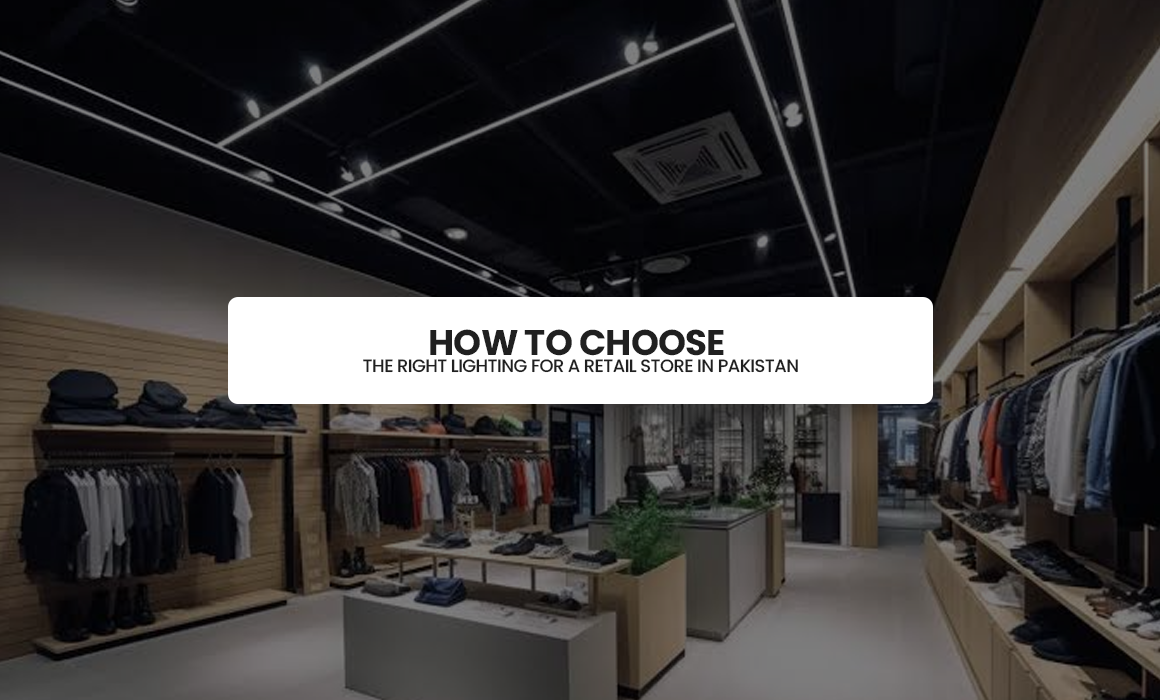
Lighting plays a major role in how customers experience a retail store. It affects product visibility, store appearance, customer comfort, and even the way products look on shelves and displays.
In Pakistan, choosing retail store lighting requires more than selecting bright bulbs. Store owners need to consider the shop size, product category, ceiling height, natural daylight, electricity consumption, customer movement, and overall brand style.
A clothing store may need soft and accurate lighting, while a grocery store may benefit from bright and even illumination. A jewelry shop needs controlled lighting that makes products attractive without creating uncomfortable glare.
The right lighting can make a store feel welcoming, organized, and professional. The wrong lighting can make products look dull, create dark corners, increase electricity costs, or make customers uncomfortable.
This guide explains how to choose the right retail lighting in Pakistan, from basic lighting types to advanced considerations such as color temperature, CRI, energy efficiency, placement, and maintenance.
Why Retail Store Lighting Matters
Customers notice lighting as soon as they enter a store, even when they do not consciously think about it.
Good lighting makes products easier to see and helps customers move comfortably through the space. It can also create a stronger connection between the physical store and the brand.
Lighting Affects Product Appearance
Different products respond differently to light.
Clothing colors need to appear natural. Food should look fresh and appealing. Cosmetics need accurate color representation. Jewelry needs focused illumination that highlights detail and shine.
This is why one lighting setup cannot work equally well for every retail business.
Lighting Influences Customer Experience
A store that is too dark can feel uninviting. A store that is excessively bright can feel harsh.
Good retail lighting creates a comfortable balance between visibility and atmosphere.
It should help customers focus on products without making the shopping environment tiring.
Lighting Can Affect Operating Costs
Retail stores often keep lights running for many hours each day.
Choosing efficient LED lighting can reduce electricity consumption compared with older lighting technologies. Efficient equipment can become especially valuable for stores operating long hours.
Understand the Main Types of Retail Lighting
Before selecting fixtures, it helps to understand the different roles lighting can play inside a store.
Most successful retail lighting plans combine several lighting layers instead of relying on one type.
Ambient Lighting
Ambient lighting provides the general illumination throughout the store.
It helps customers see aisles, shelves, walls, floors, and other areas comfortably.
Common choices include:
- LED panels
- LED downlights
- Linear LED fixtures
- Ceiling mounted lights
The goal is consistent illumination without creating unnecessary brightness.
Accent Lighting
Accent lighting draws attention to specific products or displays.
It can be used for:
- New collections
- Premium products
- Promotional displays
- Feature walls
- Mannequins
- Jewelry cases
- Decorative areas
Accent lighting should be brighter or more focused than the surrounding illumination.
Task Lighting
Task lighting provides additional illumination where customers or employees need to perform a specific activity.
Examples include checkout counters, product examination areas, fitting rooms, service desks, and work counters.
Decorative Lighting
Decorative fixtures can contribute to the visual identity of a store.
Pendant lights, statement fixtures, and architectural lighting can make a retail interior more distinctive.
However, decorative lighting should not interfere with product visibility.
Choose the Right Color Temperature
Color temperature is one of the most important decisions when selecting retail lighting.
It is normally expressed in Kelvin, commonly written as K.
| Color temperature |
General appearance |
Suitable retail use |
| 2700K to 3000K |
Warm and comfortable |
Fashion, furniture, premium interiors |
| 3500K to 4000K |
Balanced and neutral |
General retail, clothing, supermarkets |
| 4000K to 5000K |
Bright and clean |
Electronics, pharmacies, larger stores |
| Above 5000K |
Very cool appearance |
Specialized applications |
Warm White Lighting
Warm white lighting creates a relaxed and welcoming atmosphere.
It can work well for premium fashion stores, furniture shops, cafés, lifestyle stores, and boutiques.
However, using very warm light throughout a product focused store may affect how certain colors appear.
Neutral White Lighting
Neutral white often provides a practical balance between comfort and visibility.
For many retail environments, the range around 3500K to 4000K can provide a clean appearance without feeling excessively cold.
Cool White Lighting
Cooler lighting can create a bright and energetic environment.
It may suit electronics stores, pharmacies, supermarkets, hardware stores, and other spaces where clear visibility is important.
The correct choice should always consider the products and the atmosphere the brand wants to create.
Consider CRI Before Buying Retail Lights
Brightness alone does not tell you whether a retail light is good for displaying products.
CRI, or Color Rendering Index, indicates how accurately a light source can show colors compared with a reference light source.
A higher CRI generally means better color representation.
Why CRI Matters in Retail
Imagine a customer looking at a blue shirt under poor quality lighting.
The shirt may appear slightly different inside the store than it does outside.
This can create disappointment when the customer sees the product under natural daylight.
For stores selling clothing, cosmetics, paint, furniture, artwork, food, or other color sensitive products, good color rendering is particularly valuable.
A Practical Example
Consider a cosmetics store.
Customers need to compare shades accurately. If the lighting changes the appearance of foundation, lipstick, blush, or other products, customers may struggle to choose the right shade.
Good color accuracy can therefore improve the product viewing experience.
Select the Right Brightness and Light Distribution
A common mistake is assuming that more brightness automatically means better retail lighting.
It does not.
A store needs enough illumination for comfortable viewing, but excessive brightness can create glare and visual discomfort.
Lumens Matter More Than Watts
Watts indicate electrical power consumption.
Lumens indicate the amount of visible light produced.
When comparing modern LED products, pay attention to lumens rather than using wattage alone as a measure of brightness.
Avoid Uneven Lighting
A store with very bright areas and dark corners can look poorly planned.
Uneven lighting can also cause certain products to receive less attention.
The lighting plan should consider:
- Ceiling height
- Store dimensions
- Fixture spacing
- Shelf height
- Product arrangement
- Wall displays
- Customer pathways
- Natural daylight
Use Light Where Customers Look
Retail lighting should follow the customer's visual journey.
For example, a fashion store may direct stronger illumination toward mannequins, feature displays, clothing racks, and promotional areas.
This creates a natural visual hierarchy.
Match Lighting With Different Retail Store Types
Different businesses need different lighting strategies.
Clothing Stores
Clothing stores need lighting that shows colors and fabric details accurately.
A combination of general illumination and focused display lighting can work well.
Fitting rooms also deserve special attention because customers evaluate clothing under this lighting.
Grocery Stores
Grocery stores generally need bright, even illumination.
Fresh food sections may benefit from carefully selected lighting that makes products appear attractive while maintaining a comfortable environment.
Jewelry Stores
Jewelry requires controlled accent lighting.
Focused fixtures can highlight diamonds, metals, watches, and other premium products.
However, excessive glare can reduce visibility, especially on glass display cases.
Electronics Stores
Electronics stores often benefit from clean, neutral lighting.
The lighting should allow customers to examine screens, devices, accessories, and product finishes without creating distracting reflections.
Furniture Stores
Furniture stores can use a combination of ambient and accent lighting.
Warmer lighting can help create a comfortable room like atmosphere, while focused lighting can highlight individual furniture pieces.
| Retail type |
Recommended approach |
| Clothing |
Balanced general lighting with accurate color rendering |
| Grocery |
Bright and consistent illumination |
| Jewelry |
Focused accent lighting with controlled glare |
| Electronics |
Clean neutral lighting |
| Furniture |
Comfortable ambient lighting with product highlights |
| Cosmetics |
High color accuracy with balanced illumination |
| Pharmacy |
Clear, even, comfortable lighting |
| Luxury boutique |
Layered lighting with controlled accent points |
Choose the Right LED Fixtures
LED lighting has become a practical choice for many retail businesses because it can offer efficient operation, long service life, and many fixture options.
But not every LED product is equally suitable.
LED Panels
LED panels can provide broad and even illumination.
They are useful for larger retail spaces where consistent ceiling lighting is required.
LED Downlights
Downlights provide focused illumination and can work well in smaller shops, corridors, display zones, and modern retail interiors.
Track Lights
Track lighting offers flexibility because individual fixtures can be aimed toward products or displays.
This makes it useful for stores where product arrangements change frequently.
Linear Lighting
Linear fixtures can create a clean modern appearance and work well for shelves, counters, aisles, and architectural features.
Spotlights
Spotlights are useful for highlighting specific products or displays.
They should be positioned carefully to prevent glare and unwanted shadows.
Plan Lighting Around Store Layout
Lighting should be designed together with the interior layout rather than added after everything else is finished.
Entrance Area
The entrance creates the first visual impression.
The lighting should make the entrance clear and welcoming while drawing attention toward the interior.
Product Displays
Important products can receive stronger or more focused illumination.
This helps create a visual hierarchy.
Checkout Counter
The checkout area should have sufficient lighting for customers and employees to complete transactions comfortably.
The lighting should also support clear visibility of payment areas and documents.
Fitting Rooms
Fitting room lighting needs careful planning.
Harsh overhead lighting can create unpleasant shadows and make customers feel uncomfortable.
A balanced combination of ceiling and vertical illumination can provide a more flattering and useful environment.
Shelves and Wall Displays
Products placed against walls can benefit from vertical illumination.
Shelf lighting can also help customers identify products without making the entire store excessively bright.
Compare Different Retail Lighting Approaches
The right lighting strategy depends on the type of store, budget, products, and desired atmosphere.
| Approach |
Advantages |
Possible limitation |
| General ceiling lighting |
Simple and consistent |
Can look flat |
| General plus accent lighting |
Creates product focus |
Requires more planning |
| Track lighting |
Flexible positioning |
Requires careful aiming |
| Panels plus downlights |
Balanced coverage |
May need more fixture types |
| Decorative plus functional lighting |
Strong visual identity |
Decorative fixtures may increase cost |
A layered lighting approach is often more effective than using only one fixture type.
Common Retail Lighting Mistakes
Even expensive lighting products can produce poor results if they are installed without proper planning.
Using the Same Light Everywhere
A store does not need identical brightness in every area.
Different zones have different purposes.
Ignoring Glare
Glare can make customers uncomfortable and reduce product visibility.
Reflective surfaces such as glass, polished metal, mirrors, and screens require special attention.
Choosing Fixtures Only by Appearance
A stylish fixture may look excellent but still provide unsuitable light.
Always consider its optical performance, color rendering, brightness, energy use, and placement.
Using Very Cool Light Everywhere
Extremely cool lighting can make some retail interiors feel harsh.
The color temperature should match the products and brand atmosphere.
Ignoring Natural Daylight
Large windows can significantly affect indoor lighting.
A store should be designed so artificial lighting works comfortably with daylight rather than competing against it unnecessarily.
Forgetting Maintenance
Dust, damaged fixtures, failed drivers, and aging components can reduce lighting performance.
A maintenance plan helps keep the store looking consistent.
Expert Tips for Choosing Retail Lighting in Pakistan
A few practical decisions can make a significant difference.
Start With the Products
Ask what customers need to see.
If the products depend heavily on color, prioritize high color rendering.
If the products are premium and need visual emphasis, use controlled accent lighting.
If customers need to read labels, use clear and even illumination.
Consider Pakistani Operating Conditions
Retail stores in Pakistan may operate for long hours and can experience heat, dust, voltage fluctuations, and varying electrical conditions.
Choose equipment appropriate for the environment and ensure electrical installation is carried out properly.
Think About Future Changes
Retail displays change frequently.
Track lighting and adjustable fixtures can provide more flexibility than permanently fixed arrangements in some stores.
Balance Efficiency With Quality
Do not judge lighting only by the initial purchase cost.
Consider the complete operating picture:
- Energy consumption
- Expected service life
- Maintenance requirements
- Replacement frequency
- Installation requirements
- Lighting performance
A slightly better product can sometimes provide better long term value.
Retail Lighting Checklist
Before purchasing lighting for your store, review the following points.
| Question |
What to consider |
| What are you selling? |
Match lighting to product needs |
| How large is the store? |
Determine required coverage |
| What is the ceiling height? |
Select suitable fixture types |
| How much daylight enters? |
Adjust artificial lighting accordingly |
| What color temperature is suitable? |
Match the desired atmosphere |
| Is color accuracy important? |
Consider CRI |
| Where are the main displays? |
Add focused lighting |
| Are there reflective surfaces? |
Control glare |
| How long do lights operate? |
Consider energy efficiency |
| Can the layout change? |
Consider adjustable fixtures |
| How will maintenance be handled? |
Plan cleaning and replacement |
Conclusion
Choosing the right lighting for a retail store in Pakistan requires more thought than simply buying bright LED lights.
The best lighting plan considers the products, store layout, customer experience, ceiling height, natural daylight, color temperature, color accuracy, fixture type, energy consumption, and maintenance requirements.
A strong retail lighting setup usually combines different layers. General lighting provides comfortable visibility, accent lighting highlights important products, task lighting supports specific activities, and decorative lighting can strengthen the store's visual identity.
The most important principle is simple: retail lighting should support the shopping experience.
When customers can see products clearly, recognize colors accurately, move comfortably, and notice important displays naturally, lighting becomes more than an electrical requirement. It becomes an important part of the store's overall presentation and customer experience.
FAQs
1. What is the best lighting for a retail store?
There is no single lighting solution for every retail store. A combination of general, accent, task, and decorative lighting can provide better results when selected according to the products and store layout.
2. Is LED lighting good for retail stores?
Yes. LED lighting can be a practical choice for retail stores because it offers many fixture options and can provide efficient operation. The quality of the LED product, color rendering, brightness, and installation all matter.
3. What color temperature is best for retail stores?
It depends on the store. Neutral white around 3500K to 4000K can work well for many general retail environments. Warmer lighting may suit premium and lifestyle stores, while cooler lighting can work well in environments where a bright and clean appearance is preferred.
4. Why is CRI important for retail lighting?
CRI is important because it indicates how accurately a light source can reproduce colors. Good color rendering is especially useful for clothing, cosmetics, food, furniture, paint, jewelry, and other products where customers need to judge colors accurately.
5. How can a retail store reduce lighting electricity costs?
Stores can reduce lighting energy use by selecting efficient LED fixtures, avoiding unnecessary over lighting, using suitable controls, taking advantage of natural daylight, and maintaining fixtures properly. The lighting system should be designed around actual store requirements rather than simply maximizing brightness.